
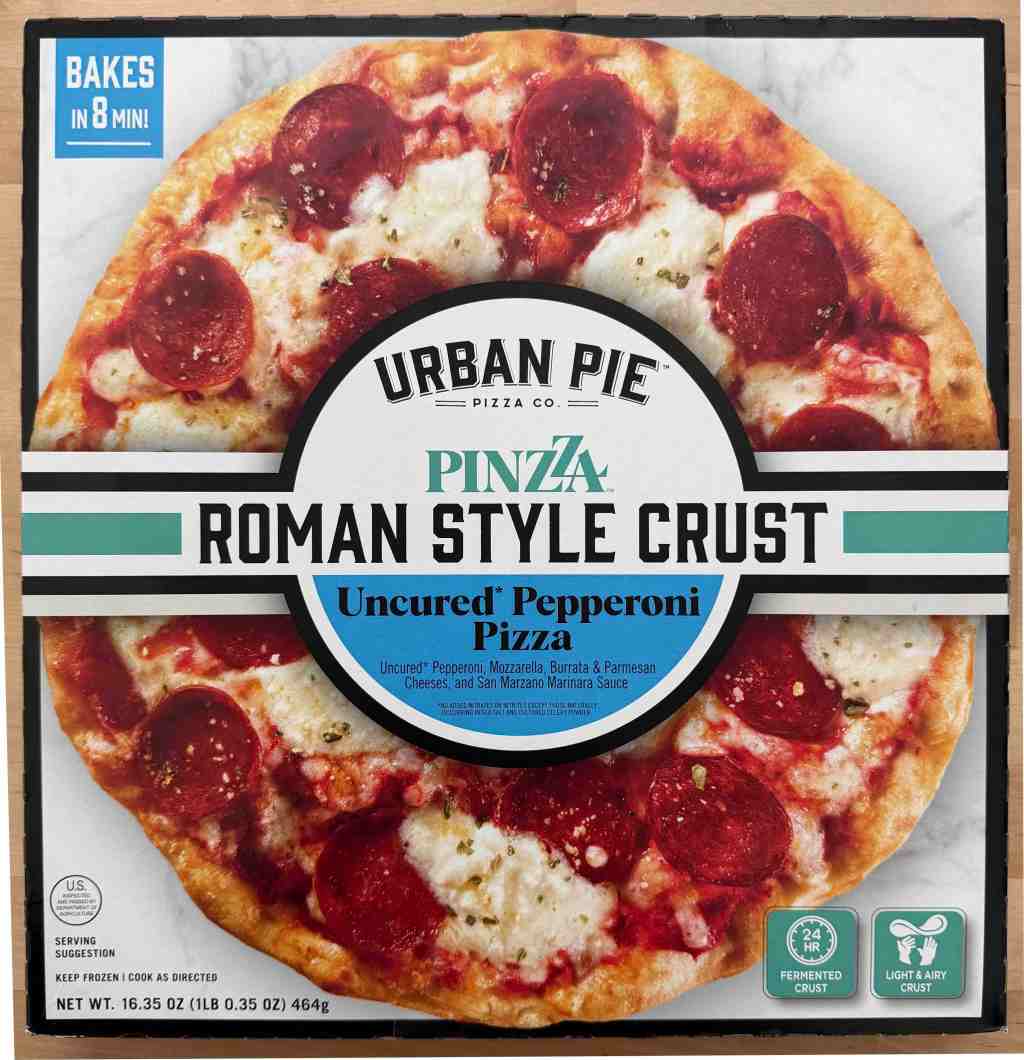
Frozen Pizza, Reimagined: The Roman Holiday in My Kitchen
Let’s be honest: the freezer aisle is often a graveyard of culinary broken promises. We’ve all been there, drawn in by the vibrant photography on a cardboard box, promising a hearth-baked masterpiece, only to pull out something that tastes remarkably like the box it came in. As someone who has spent over sixteen years behind the line in professional kitchens, my relationship with frozen pizza is, shall we say, complicated.
However, there is a certain thrill in the hunt for that rare “diamond in the rough.” I’ve always believed that great food doesn’t always have to come from a white-linen establishment or a three-hour prep session. Sometimes, the most “enjoyable” things are the ones that surprise us by exceeding our expectations in the most mundane settings. That curiosity is exactly what led me back to the freezer case for a second round with Urban Pie.
My first foray into their lineup left me genuinely intrigued. In a world of “thin and crispy” or “cardboard-thick” crusts, they seemed to be doing something different. So, when I spotted the Urban Pie Pinzza (Roman Style Crust) with Uncured Pepperoni, I felt that familiar spark of culinary hope. The term “Pinzza” is a clever nod to Pinsa Romana, a traditional style known for its airy, cloud-like interior and distinctively crisp exterior. It’s a bold claim for a frozen product. Could a mass-produced, frozen dough mimic the complex structure of a slow-fermented Roman crust?
I brought it home, cleared some space on the counter, and prepared to put my chef’s hat back on, at least figuratively, to see if this could truly be the upgrade my freezer routine desperately needed.
The First Look: Presentation and the “Cold” Tech
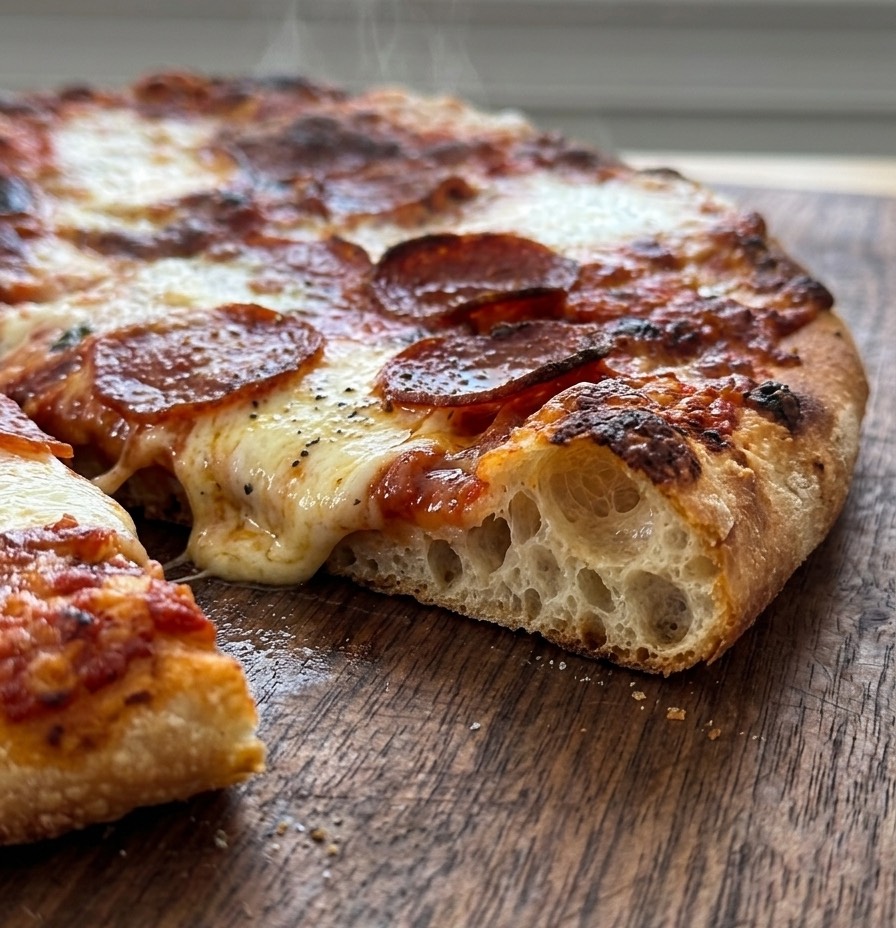
As a former chef, I look at packaging through two lenses: marketing and preservation. Urban Pie wins points immediately for the latter. The pizza was wrapped securely in heavy-duty plastic, which is vital for preventing the dreaded freezer burn that ruins the cellular structure of both the dough and the cheese.
Before it even hit the heat, I noticed the distribution. Usually, with frozen pizzas, you must play “pepperoni Tetris,” moving all the slices from one corner to the center. Not here. The uncured pepperoni was evenly spread, and the cheese blend reached nearly to the edge, leaving just enough room for that Roman-style “cornicione” (the edge of the crust) to puff up. I preheated the oven, opted for the center rack for optimalairflow, and prepared for the transformation.
Behind the Technique: The Science of the Bake
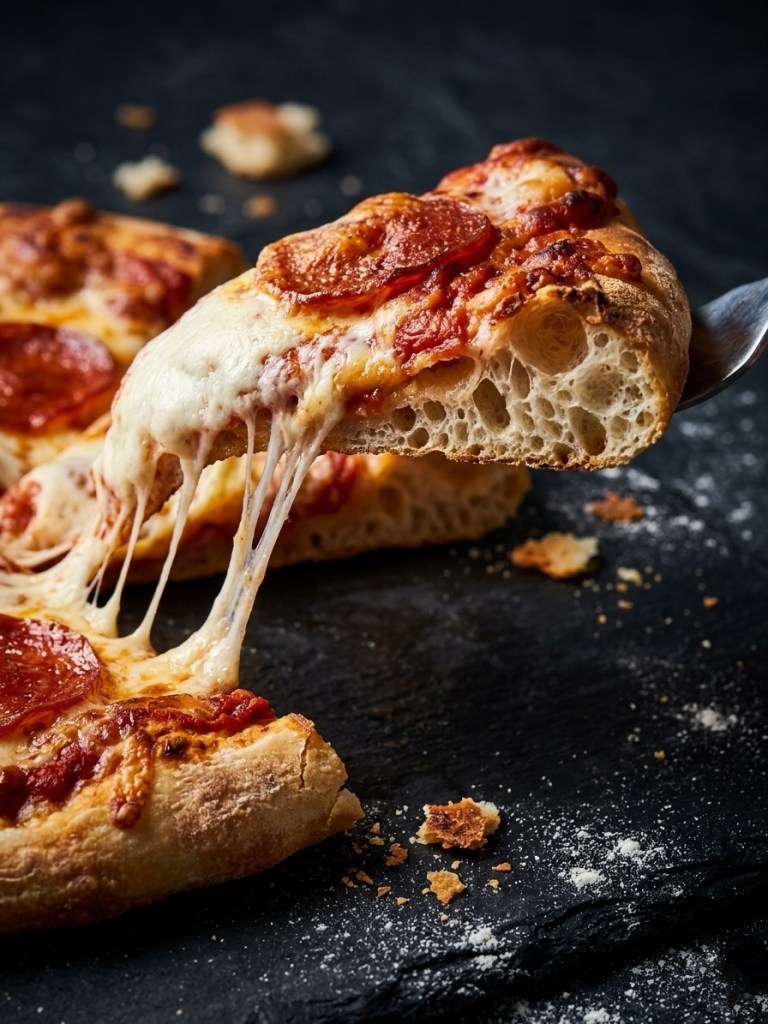
One of the secrets to a great bake is not following the instructions blindly but following them wisely. The box gave a time range, and as any seasoned cook knows, every oven has its own personality; some are aggressive, some are shy. I decided to split the difference on the recommended time, rotating the pizza halfway through to ensure the heating elements hit every angle.
Watching through the oven glass, I saw the “Pinzza” start to live up to its name. The crust didn’t just sit there; it lifted. That’s a sign of proper leavening. When I pulled it out, it had reached that perfect, mottled golden brown, what we call “GDB” (Golden, Delicious, Brown) in the industry. But the real test was the rest. I let it sit on the cutting board for a full three minutes. This allows the steam to redistribute, so the crust doesn’tturn soggy the moment you slice it.
Texture Breakdown: The “Pinzza” Promise
The moment of truth came with the first cut of the wheel. The “crunch” was audible, a sharp, clean snap that signaled a well-dehydrated exterior. However, the interior was the real star. Roman-style dough is meant to be highly hydrated and long-fermented, resulting in large air pockets (alveoli). Urban Pie managed to replicate this surprisingly well. It was thick but remarkably light, avoiding the dense, “doughy” weight of typical frozen deep-dish styles.
The mouthfeel was a sophisticated play of contrasts: the initial shatter of the bottom crust followed by a soft, pillowy chew. It tasted like fermented bread. You could tell the dough had been given time to develop flavor rather than being rushed through a high-speed commercial proofer.
Flavor Profile and Nuance: Beyond the Salt
When we analyze flavor, we look for balance between the “Big Four”: Salt, Fat, Acid, and Heat.
- The Pepperoni: Using uncured pepperoni makes a massive difference. It had a clean, pork-forward flavor without the chemical aftertaste of heavy nitrates. It provided a gentle heat and a pleasant, slightly firm chew.
- The Sauce: This was the biggest surprise. Many frozen pizzas over-sugar their sauce to compensate for low-quality tomatoes. This sauce had a subtle sweetness, but it felt natural, a byproduct of good tomatoes, and was backed by a bright acidity and the fragrant punch of garlic and herbs.
- The Cheese: It actually had “stretch.” Most frozen mozzarella is so processed it melts into a flat, plastic-like sheet. This blend had a buttery pull and a rich, creamy finish that tied the spicy pepperoni and acidic sauce together.
The Verdict: A Freezer Aisle Game Changer
This wasn’t just a “good for being frozen” pizza; it was a legitimately good meal. The Urban Pie Pinzza is a clear upgrade for anyone tired of the same old circular cardboard. It respects the ingredients and, more importantly, it respects the process of dough making.
Final Rating: 4.5/5 Stars
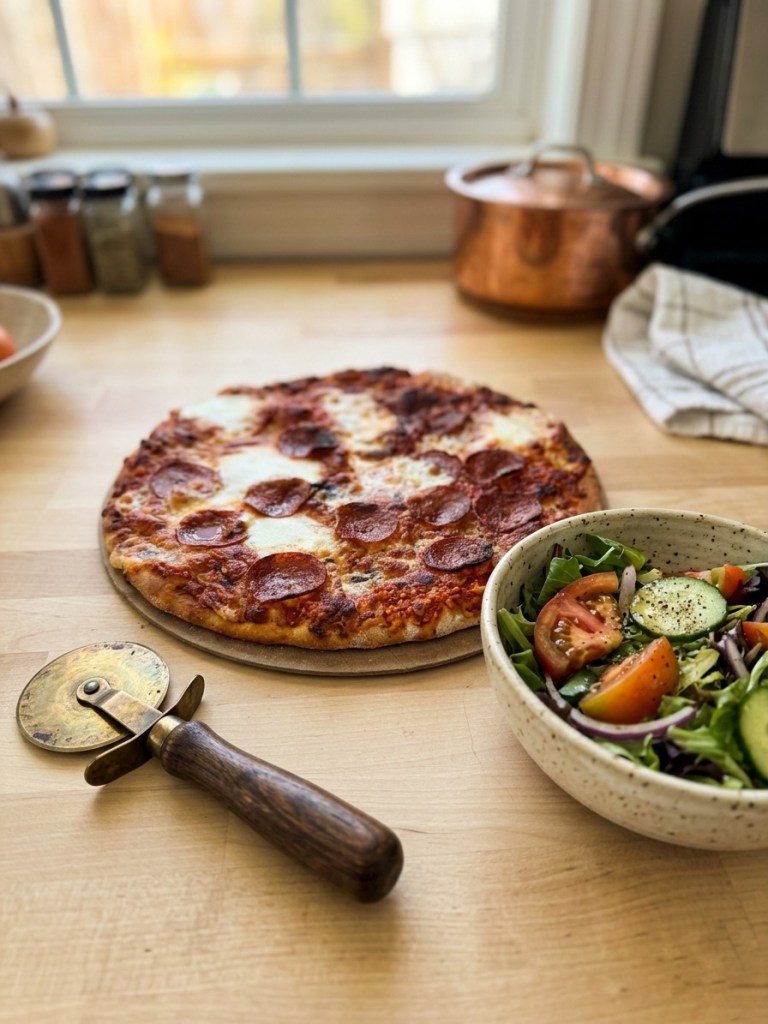
My final reflection? We often get caught up in the “perfect” meal, the one that takes all day to cook or costs a week’s wages. But there is a profound joy in finding excellence in the everyday. Whether it’s a perfectly captured photo on a vintage phone or a frozen pizza that actually understands the soul of Roman crust, these are the small wins that make life flavorful. If you pair this with a crisp, acidic green salad and a light vinaigrette, you’ve got a dinner that could easily satisfy three to four people and leave them wondering which local bistro you ordered from.
What about you? Have you found a “hidden gem” in the frozen food aisle that changed your mind about convenience food, or is there a specific pizza style you’re still searching for in a box? Let’s talk shop in the comments!

