
Is Real Dough’s “Peppin’ Ain’t Easy” Worth the Premium?
Good morning, food lovers! Welcome back to another corner of my culinary world here at things-i-enjoy.com. You know, there’s a specific kind of quiet magic in the frozen food aisle. It’s a place of infinite promise and, let’s be honest, frequent heartbreak. We’ve all been there: standing in front of the glass doors, the frost nipping at our fingertips, staring at a box that promises a “pizzeria-quality experience” for the price of a fancy latte. As a former chef, my relationship with the frozen pizza section is… complicated. I spent years in professional kitchens obsessing over hydration levels, fermentation windows, and the precise temperature of a wood-fired hearth. To me, dough isn’t just a base; it’s a living thing.
I’ve already danced with their sausage offering, so when I saw the Peppin’ Ain’t Easy Pizza sitting there for $11 (on sale, but normally $12), I knew I had to go back for round two. Now, let’s talk about that price point. Eleven dollars for a frozen disc of dough and cheese is not a budget buy. That’s premium territory. At that price, the margin for error shrinks significantly. You aren’t just paying for convenience; you’re paying for a promise of quality that should, theoretically, outshine the $5 cardboard circles sitting two spots down.
What really hooked me this time, though, was the “Hot Honey” element. Hot honey has become the darling of the artisan pizza world over the last few years, and for good reason, when done right, the capsaicin kick cuts through the fat of the pepperoni and cheese beautifully. But bringing that to a frozen platform? That’s a bold move. I dropped it into my basket with a mixture of professional skepticism and genuine excitement. Could a mass-produced frozen pizza actually balance the complexity of sourdough and the trendy heat of hot honey? It was time to head home, preheat the oven, and find out if “Peppin’” really was that easy.
The First Look: Marketing vs. Reality
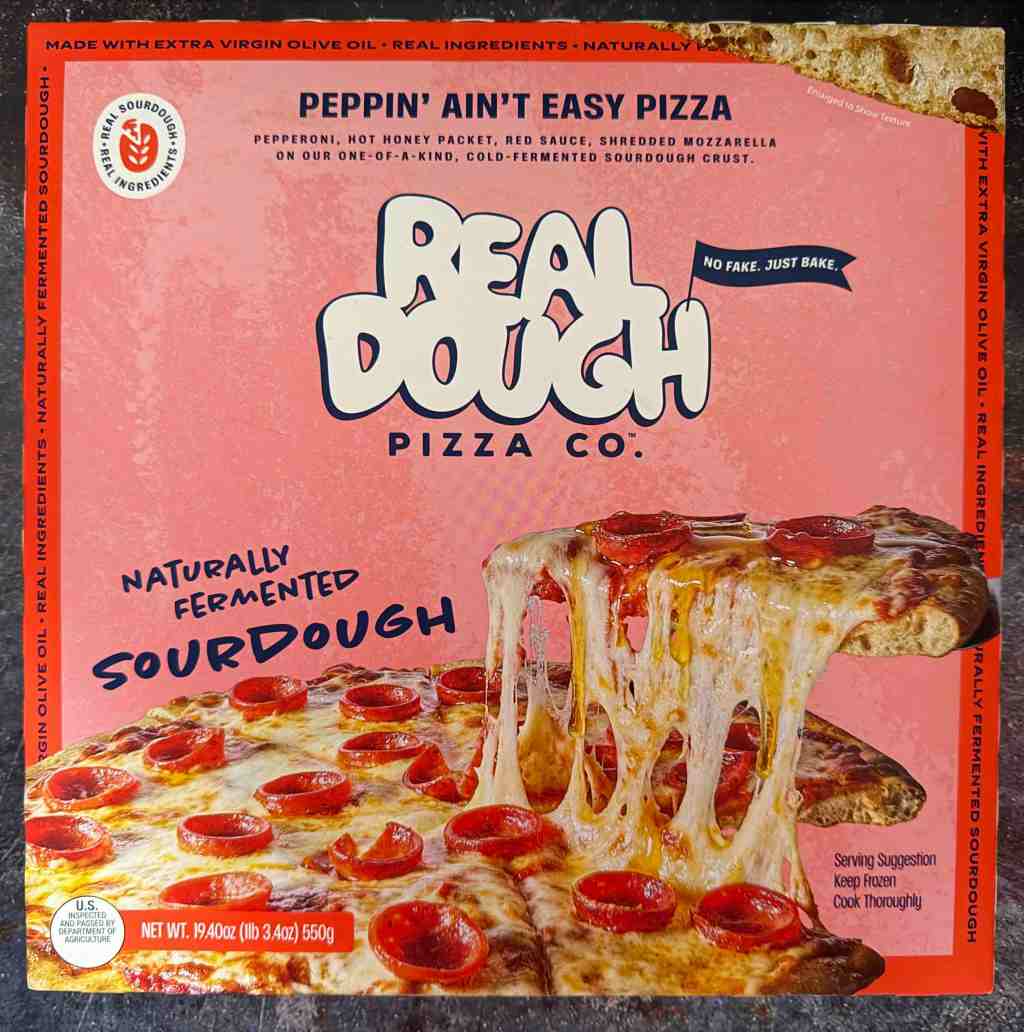
Straight out of the grocery bag, the packaging for Real Dough Pizza Co. does a lot of heavy lifting. It’s clean, it’s simple, and it hammers home the message: The dough is the star. I appreciate that. In a world of over-designed boxes, they want you to focus on the craft. However, the first red flag appeared before I even turned on the oven.
The box features a stunning “cheese pull”, that gooey, elastic stretch that makes every pizza lover’s heart skip a beat. As a reviewer, I have to call a foul here. In all my years, I have never encountered a frozen pizza that produces a genuine, artisanal cheese pull. It’s the “white whale” of frozen food marketing.
When I slid the pizza out of its plastic wrap, the “Real Ingredients” claim met the reality of mechanical assembly. It was a bit of a crime scene, honestly. The pepperoni distribution looked like it had been handled by someone in a very big hurry; two-thirds of the pizza was a barren wasteland with exactly five lonely slices, while the final third was a congested mosh pit of pepperoni. There were also significant “voids”, large patches where the cheese had missed its mark, leaving the sauce exposed like a pothole on a rainy street. It’s a reminder that even “premium” frozen food is still a product of a factory line.
Texture Breakdown: The Sourdough Redemption
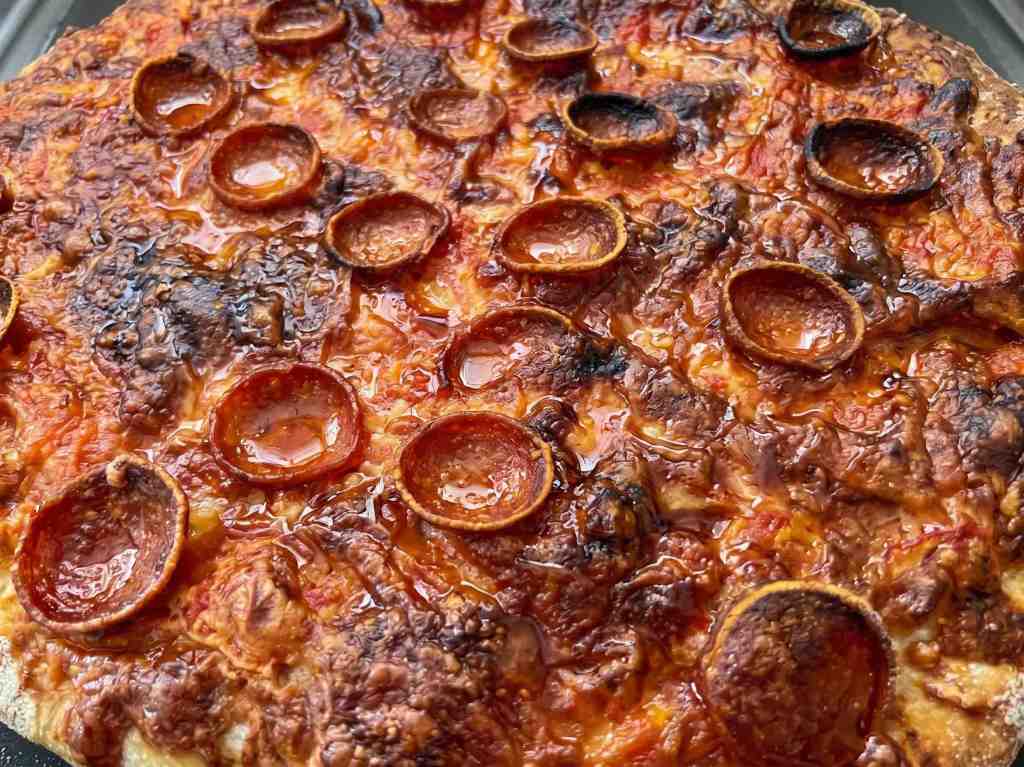
I followed the instructions to the letter, and at the 19-minute mark, I pulled a beautiful, golden-brown specimen from the rack. This is where the Real Dough name actually starts to earn its keep.
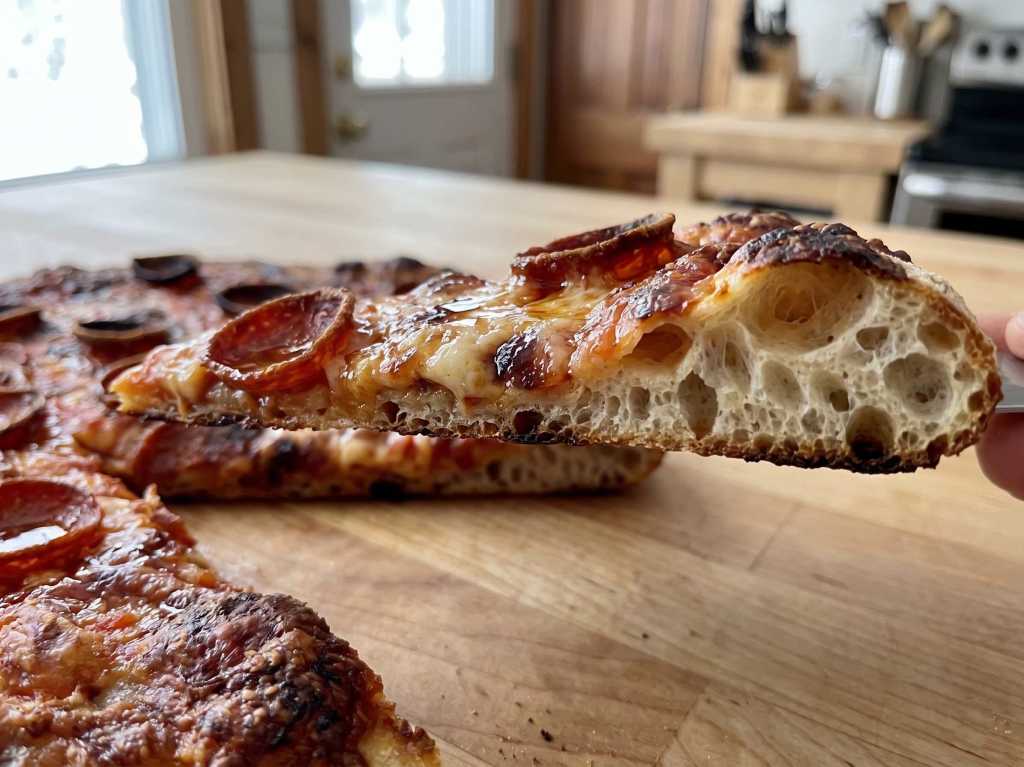
From a technical standpoint, the crust is a triumph. The use of a sourdough starter provides a structural integrity you just don’t find in standard frozen pies.
- The Bottom: It achieved a genuine “shatter” crispness. No soggy middle here.
- The Crumb: There was a delightful “chew” to the interior, what we chefs call the “toothsome” quality.
- The Edge: The cornicione (the rim) had a light, airy quality that spoke to a decent fermentation process.
The pepperoni also performed well under heat. They “cupped” perfectly, forming those little oily bowls that catch the heat and concentrate the flavor. If the dough is the foundation, these little pepperoni cups are the architectural flourishes. However, the cheese… well, the cheese was the weak link. It tasted fine, but the texture was indistinguishable from any other mid-tier frozen pizza. And that legendary “pull” from the box? Non-existent. It stayed stubbornly in place, refusing to perform for the camera.
Flavor Profile and Nuance: The Sweet and the Heat
Let’s get into the “Peppin’ Ain’t Easy” flavor experience. The pepperoni itself is high-quality; it has a respectable spice level that lingers without overstaying its welcome. It’s savory, salty, and has a pleasant fatty mouthfeel. The sauce is a solid “B+”, tangy, noticeably tomato-forward, and sweet enough to balance the acidity without tasting like candy.
Then, we have the Hot Honey.
This is where my personal palate and my professional analysis might diverge for some of you. The heat was a welcome guest, it added a layer of complexity that elevated the pepperoni. But the sweetness? For me, it was a red flag. As a chef, I’ve always been a bit of a purist; I’m not a fan of sweet sausage, and I generally find “dessert-adjacent” flavors on a savory pizza to be a distraction. To me, pizza is a temple of salt, fat, and acid. Introducing a syrupy sweetness felt like a bit of a gimmick. However, if you are the type of person who loves the contrast of a sweet-and-spicy BBQ or a Hawaiian slice, you will likely find this “interesting” in the best way possible.
Behind the Technique: Decoding the “Real” Ingredients
As a former chef, I like to look at the fine print. Real Dough stakes its reputation on “Real Ingredients,” but a quick glance at the label reveals some interesting players. We see Devitalized Rye Sourdough, which is essentially a dried sourdough culture used to impart that distinct tangy flavor without the unpredictability of a live starter. It’s a smart way to scale “artisan” flavor for a national frozen market.
Then there’s the newcomer: Cultured Celery Powder. This is a common industry “clean label” trick. It’s used as a natural source of nitrites to preserve the pepperoni. While it technically allows the brand to avoid saying “artificial preservatives,” it’s still a processed additive. I don’t go to the market looking for “cultured celery powder,” and I think it’s important for consumers to realize that “Real Ingredients” is often a carefully crafted marketing term rather than a culinary philosophy. That said, the lack of high-fructose corn syrup and overly engineered stabilizers is a win in my book.
Final Verdict: A Premium Slice of Life
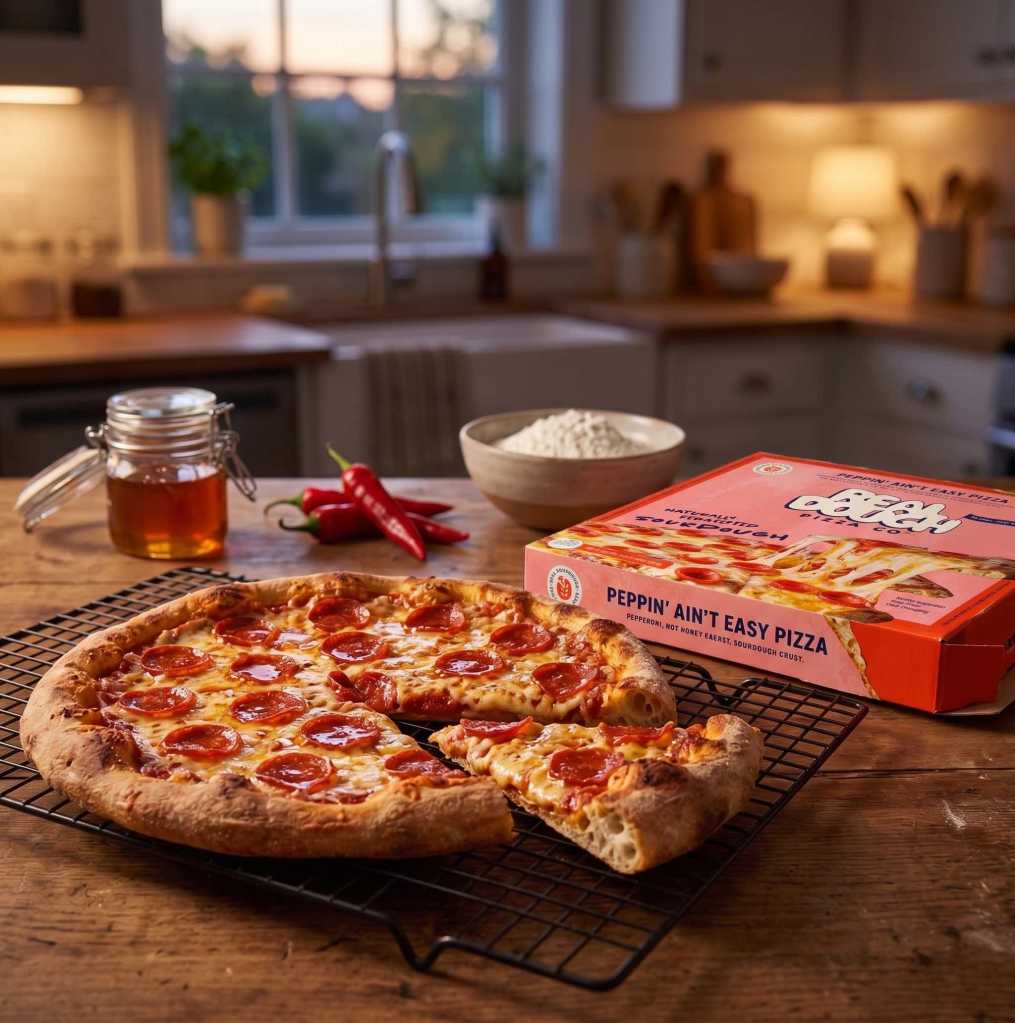
Overall, I really liked this pizza. Despite my grumblings about the honey’s sweetness and the mechanical assembly of the toppings, the core experience is head and shoulders above the standard frozen fare. The sourdough crust is a legitimate differentiator, the kind that makes you want to eat the “bones” (the discarded edges).
At $12, is it a daily driver? Probably not. But for a Friday night in when you want something better than delivery but don’t want to leave the house, it’s a stellar option.
Who should try this? Sourdough enthusiasts and those who enjoy the “Swicy” (sweet and spicy) food trend.
- Best served with: A crisp, bitter tossed salad (think arugula or radicchio) with a simple lemon vinaigrette. The bitterness of the greens will perfectly cut through the sweetness of the hot honey and the richness of the pepperoni.
- Verdict: 4 out of 5 stars. It loses a point for the sloppy topping distribution and the misleading “cheese pull” marketing, but gains it back on the strength of that sourdough.
Finding joy in food doesn’t always require a white tablecloth and a tasting menu. Sometimes, it’s found in the satisfying “crunch” of a well-engineered frozen crust and the heat of a well-spiced pepperoni. Real Dough Pizza Co. isn’t perfect, but it’s trying to do something better, and in the world of frozen food, that’s an effort worth enjoying.
What about you? Are you a fan of the “Hot Honey” trend on pizza, or are you a savory purist like me? Let’s settle the “sweet on pizza” debate in the comments below!

