
I Brave Urban Pie’s Cauliflower Crust Italian Sausage Pizza
Let’s talk about trust, commitment, and the sacred geometry of a really good pizza. If you’ve been hanging around things-i-enjoy.com for any length of time, you know that my relationship with food is built on a foundation of professional kitchen experience and an unapologetic love for the classics. As a former chef, I view pizza dough not just as a vehicle for cheese and sauce, but as a living, breathing canvas. It requires water, yeast, flour, salt, time, and a whole lot of respect.
So, when the culinary world decided to start turning cruciferous vegetables into flatbreads, I naturally approached the trend with a healthy (no pun intended) dose of professional skepticism. Why mess with a masterpiece? Why ask a vegetable to do the heavy lifting of a complex carbohydrate?
A few weeks ago, I reviewed the Uncured Pepperoni & Sliced Chicken Sausage pizza from Urban Pie. Against my cynical expectations, I actually really liked it. It was a solid offering in the crowded freezer aisle. I was feeling so magnanimous, so emboldened by that success, that I made a public promise to you, dear readers: I would seek out their cauliflower crust offering and give it a fair, unbiased shake.
Fast forward to a chilly Saturday morning. I was standing in the harsh, fluorescent glow of the grocery store freezer section staring down the Urban Pie Thin Crust Cauliflower Italian Sausage Pizza. I hesitate to admit this, but the internal battle was real. I picked up the box. I looked it over. I read the ingredients. I put it back. I sighed, picked it up again, and finally sucked it up, tossing it into my cart. Talk about commitment to the bit. If I say I’m going to do something for the blog, I do it. Even if it means bringing a cauliflower pizza into my home.
What follows is an honest, chef-brained breakdown of what happens when traditional pizza toppings meet modern dietary trends. Is it a hidden gem, or is it culinary cognitive dissonance? Let’s slice into it.
The First Look: Box Art and Frozen Landscapes
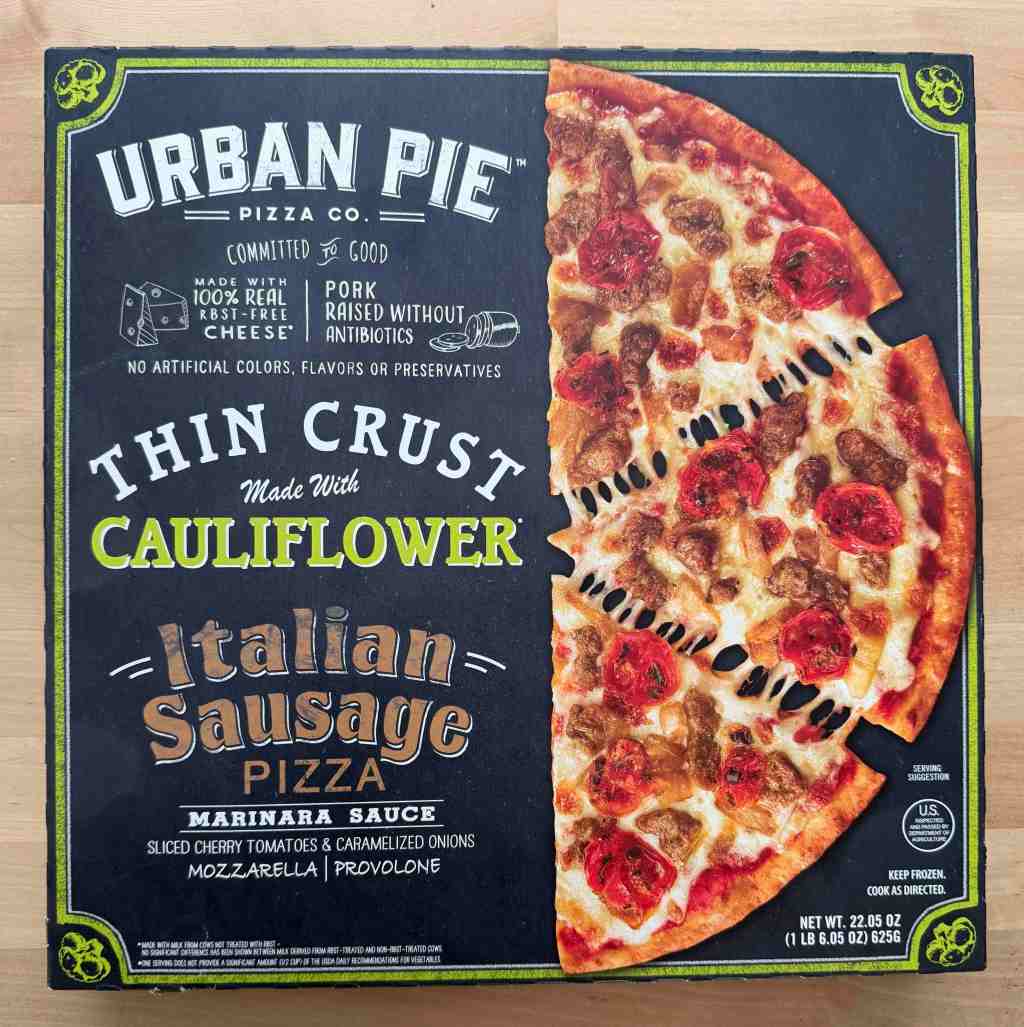
Similar to my previous run-in with Urban Pie, the packaging requires a bit of reading. Half of the box top is essentially a giant, run-on sentence functioning as an advertisement, boasting about their artisanal approach. The other half is dedicated to a stunning, perfectly lit beauty shot of the pizza. Let me give you some free advice from someone who has spent years plating food: do not be deceived. You will absolutely not experience the magnificent, gravity-defying cheese pull shown on the cardboard. That is the magic of food styling, not the reality of frozen mozzarella.
The label makes some hefty promises: Italian sausage, marinara, cherry tomatoes, caramelized onion, mozzarella, and provolone. All resting precariously on top of a thin crust made with cauliflower. Gulp.
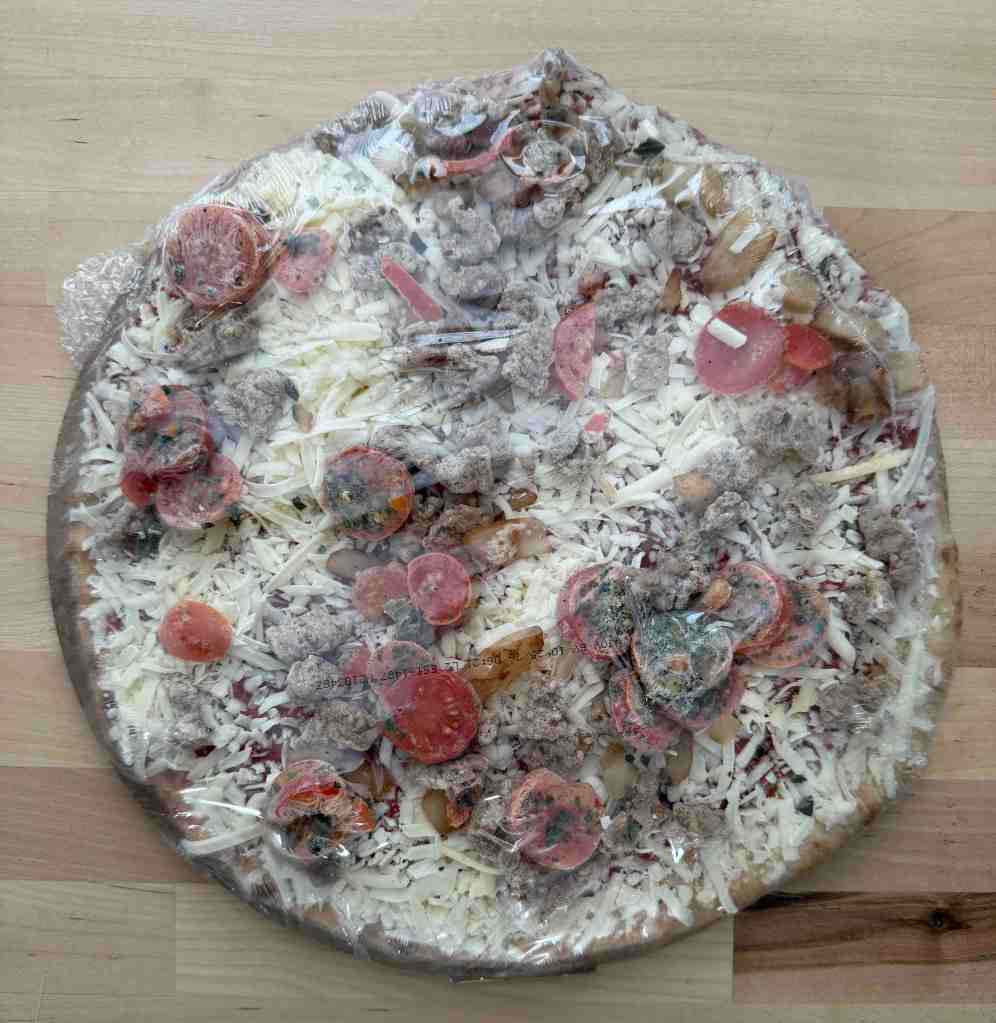
Upon liberating the pizza from its plastic wrapping, it displayed the typical traits of a mechanically topped frozen pie. The arrangement of the ingredients immediately gave off what I can only describe as “continents on a planet” vibes. There were some larger clusters of toppings drifting over the surface, interspersed with smaller disbursements. However, credit where credit is due: all the promised toppings were distinctly visible and generously applied, which is always a good sign before things hit the heat.
The Heat is On: Baking and Technique
I am a stickler for following directions on the first pass, so I preheated the oven and set my timer. It took exactly 19 minutes to achieve a genuinely nice, golden-brown bake. As the heat did its work, the kitchen began to smell like a proper pizzeria. The familiar, comforting aromas of baked cheese, sweet tomato, and savory sausage filled the air. But underneath it all, lurking like an uninvited guest at a dinner party, was a very slight, undeniable odor of roasting cauliflower.
Visually, pulling it out of the oven, everything looked like pizza. The edges had darkened beautifully, the cheese was bubbling, and the crust had crisped up nicely along the perimeter. The real test of a thin crust, however, is the structural integrity. When I pressed my chef knife down through the center, it yielded with an audible, satisfying crunch. So far, the physics of the pizza were holding up to scrutiny.
The Toppings: A Symphony of Traditional Flavors
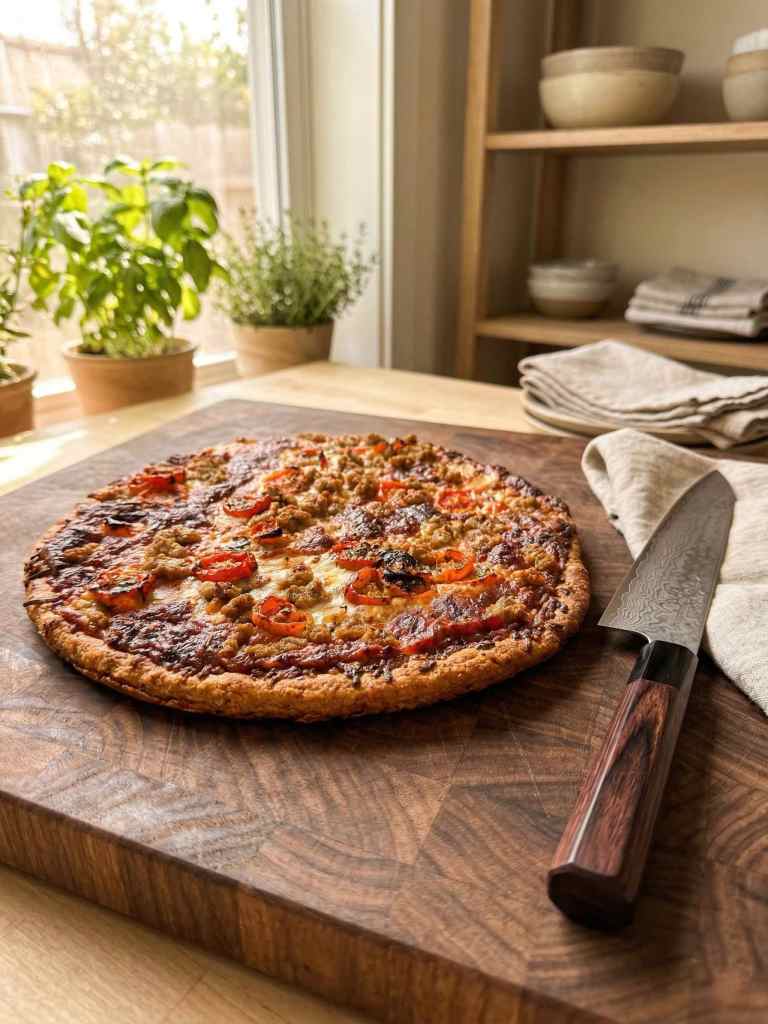
Let’s start with the positives, because everything happening above the crust is actually quite good. All the flavors you would expect from a premium frozen pizza are present and highly flavorful.
The marinara sauce leans a little bit to the sweet side, but it still holds a pleasant, robust tomato backbone that balances well with the savory elements. The Italian sausage is a standout, boasting a great fat-to-lean ratio that provides excellent texture and a traditional, fennel-forward flavor profile. I was particularly impressed with the cherry tomatoes, which managed to develop some really nice char and concentrated sweetness during the 19-minute bake. The caramelized onions added a subtle, earthy sweetness that tied the provolone and mozzarella together beautifully. If this exact topping combination had been layered on a traditional dough, we’d be having a very different conversation right now.
The Crust Conundrum: Texture, Flavor, and the Deal-breaker
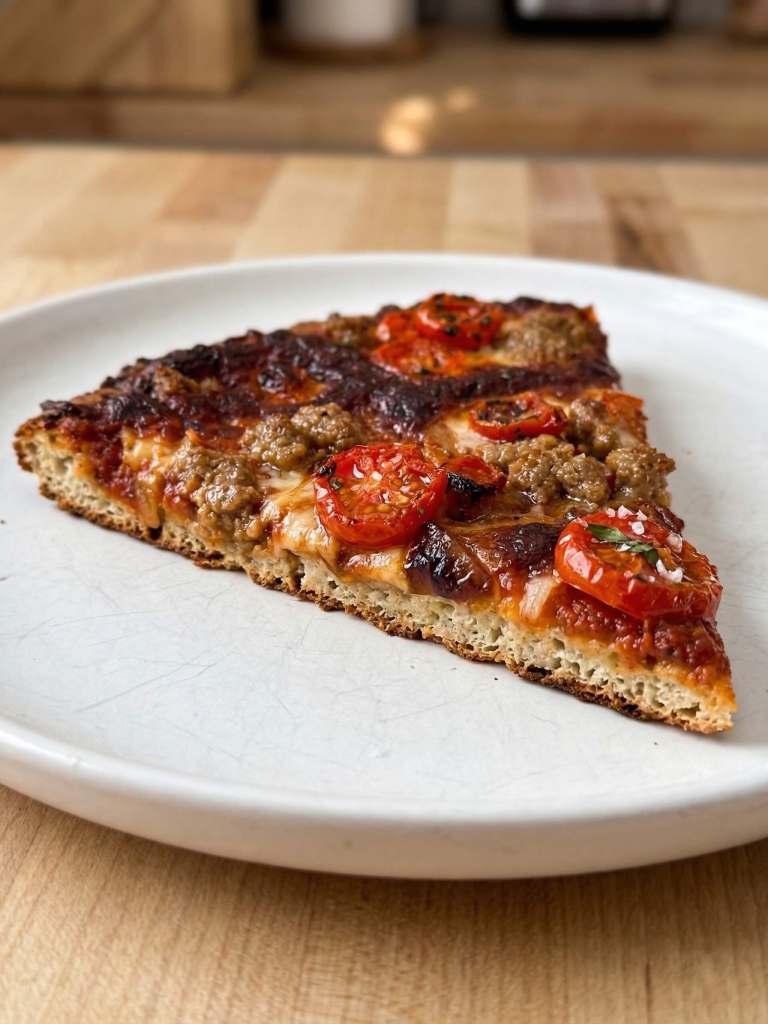
This is where things got wonky for me, and where my chef background simply couldn’t compromise.
I don’t quite know how to describe the sensory journey of eating this crust, but I’ll try. At first bite, the texture tricks you. It crunches, it holds the toppings, and for a fleeting second, it tastes like crust. But then, as the bite sits on your mid-palate, the disguise falls apart. The vegetal, distinctly brassica taste of the cauliflower begins to bleed through the marinara.
My brain simply could not wrap around it. The cognitive dissonance of experiencing the texture of pizza alongside the flavor profile of a roasted vegetable side dish was too much. It was a resounding nope. Nada. No way, Jose. A pizza crust is supposed to be a neutral, yeasty canvas that elevates the toppings, not an active, competing flavor profile that reminds you you’re eating your vegetables.
The Final Verdict: Knowing Your Audience
After finishing my tasting, I sat down at my laptop, poured myself a fresh mug of coffee to cleanse my palate, and listened to some music to clear my head. Moo, one of my cats, hopped up on the desk, gave the lingering scent of the pizza a quick sniff, and promptly walked away. I think we were in agreement.
While I know this style of pizza has a massive, dedicated following, I will definitively not be one of those individuals. For me, this offering is a hard no.
However, my professional opinion comes with a very important caveat. I can absolutely see how this pizza is a fantastic offering for people with specific dietary needs. If your health, lifestyle, or dietary requirements will not allow for a typical wheat-based frozen pizza crust, then I would highly recommend this offering to you. All the other “pizza” flavor goodness, the sauce, the cheese, the quality sausage, is absolutely there and executing at a high level. It scratches the itch.
But, if you are like me, and you don’t need an alternative crust pizza, then steer clear of this one. Save your money, buy the traditional Urban Pie offerings, and leave the cauliflower in the produce aisle where it belongs. Finding the things I enjoy sometimes means figuring out exactly what I don’t, and this was definitely a learning experience.
What about you all? Have you found an alternative crust that actually fools the palate, or are you a traditional dough purist like me? Let me know your thoughts in the comments below!
 Things I Enjoy