
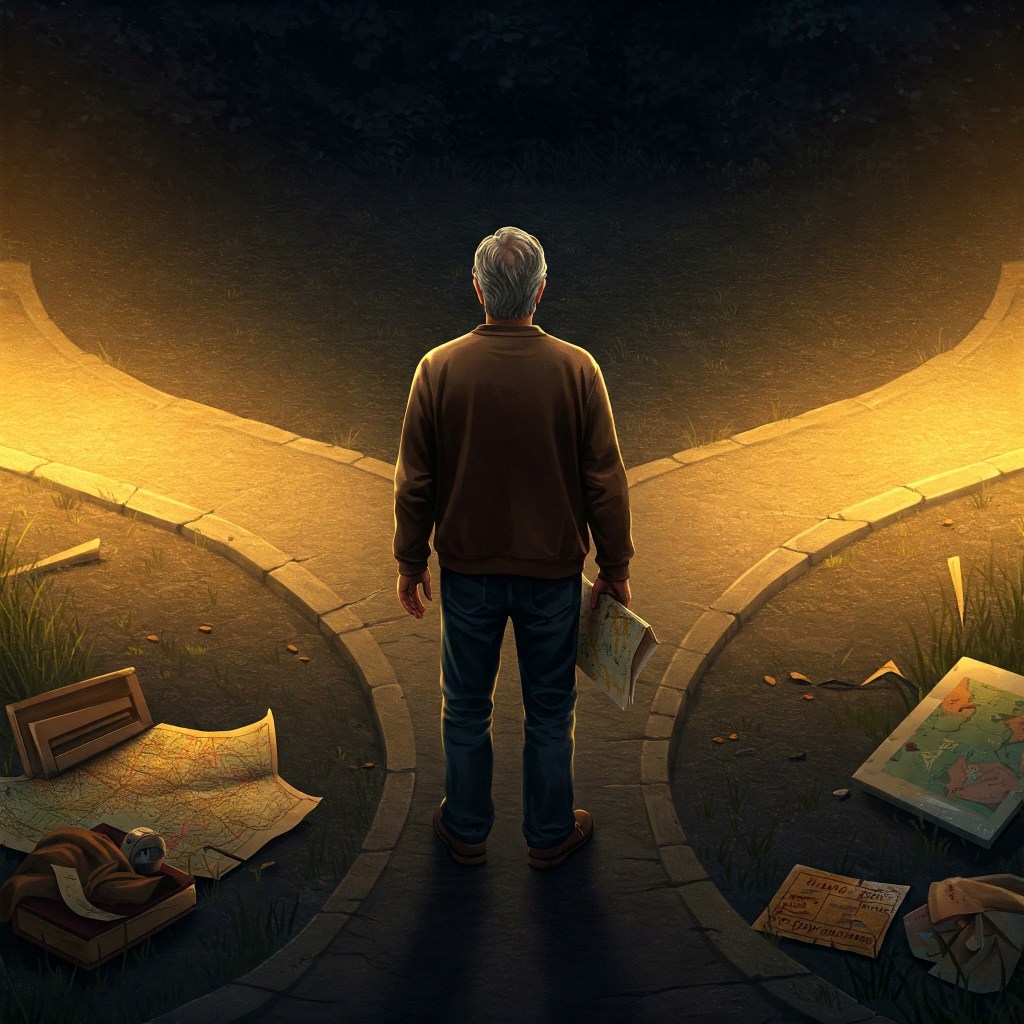


Ever catch yourself in a quiet moment—maybe as the day winds down—and a certain memory floats to the surface? It’s not a bad memory, not exactly. But it carries a weight, a subtle pang. It’s the whisper (sometimes a little louder) of, “If only I had…“
Think about it:
- That job offer you didn’t pursue.
- The trip you kept putting off.
- The conversation you meant to have but never did.
- The creative project now gathering dust.
These are the ghosts of opportunities past—the paths not taken. Which ones resonate most with you right now?
It’s a fundamental part of being human, isn’t it? This tendency to ponder, “What if?” It’s actually part of how we learn and grow, a way our minds process experiences. But like anything, there’s a delicate balance. When does healthy self-reflection tip over into getting stuck in the quicksand of “could have been”?
Your mind can become a time machine, constantly replaying scenarios. You envision a different outcome, a brighter future that might have been. And while a little of this can be helpful—a mental note to be braver next time, for example—dwelling on it for too long can be emotionally draining. It can tether you to the past, making it harder to fully embrace the present and step confidently into the future.
Navigating the Labyrinth of Regret: Two Paths
Philosophically, this dance with regret touches on profound aspects of the human condition. We grapple with the limitations of time, the finality of choices, and the inherent uncertainty of life. Even the ancient Stoics recognized this struggle, encouraging us to focus on what we can control—our actions and our responses—rather than dwelling on what we cannot change. Easier said than done, right?
But here’s a crucial insight: Regret doesn’t have to be a life sentence. You have a choice in how you engage with those “if only” moments.
Option One: The Deep Dive into Despair
You can choose to set up camp in the land of regret. You can endlessly analyze what went wrong, assign blame (often to yourself), and let the “what ifs” overshadow the “what is.” What does this path feel like? Often, it leads to feelings of bitterness, anxiety, and a sense of being stuck. The past becomes a heavy anchor, preventing you from sailing toward new horizons. Have you ever felt this way?
Option Two: The Path of Acceptance and Growth
Or, you can choose a different route. You can acknowledge the missed opportunity, feel that initial pang of disappointment, but then consciously decide to learn from it. This isn’t about pretending the past didn’t happen or sugarcoating the outcome. Instead, it involves:
- Recognition: Identify the specific regret and understand the circumstances surrounding it. What exactly are you regretting?
- Acceptance: Acknowledge that the past is immutable. You can’t go back and change it. This can be tough, but it’s a vital step.
- Learning: Ask yourself: What can I learn from this experience? What would I do differently next time? What strengths or weaknesses did this situation highlight? These “if only” moments can be powerful teachers.
- Moving Forward: Consciously shift your focus to the present and future. What new opportunities are available now? What actions can you take today to create a different “what if” for your future self?
And let’s not forget self-compassion. Be kind to yourself. Everyone makes mistakes and misses opportunities. It’s part of being human.
Turning Regret Into a Compass
Think of those “if only I had…” moments not as failures, but as valuable data points in the ongoing experiment of your life. They can illuminate your values, your fears, and your aspirations in ways that successes sometimes don’t. Maybe you didn’t take that photography workshop you always dreamed of. Instead of dwelling on the lost skills, perhaps you can explore online courses now, fueled by that past yearning. Or maybe you didn’t speak up in that crucial meeting. Now you can consciously work on building your confidence and finding your voice in future situations. These moments can highlight what truly matters to you.
The power truly lies in the reframe. Instead of letting regret paralyze you, can you transform it into a catalyst for positive change? Can you use it as a compass, guiding you toward a more intentional and fulfilling future?
I believe you can. The echoes of “if only I had…” don’t have to be mournful sighs. They can be gentle reminders, nudging us to embrace the present moment and seize the opportunities that lie ahead.
Your Turn: Let’s Reflect Together
Now, I’d love to hear from you. What are some of your “if only I had…” moments—and more importantly, what have you learned from them? Share your thoughts in the comments below. Let’s create a space for shared reflection and growth!
 Things I Enjoy